
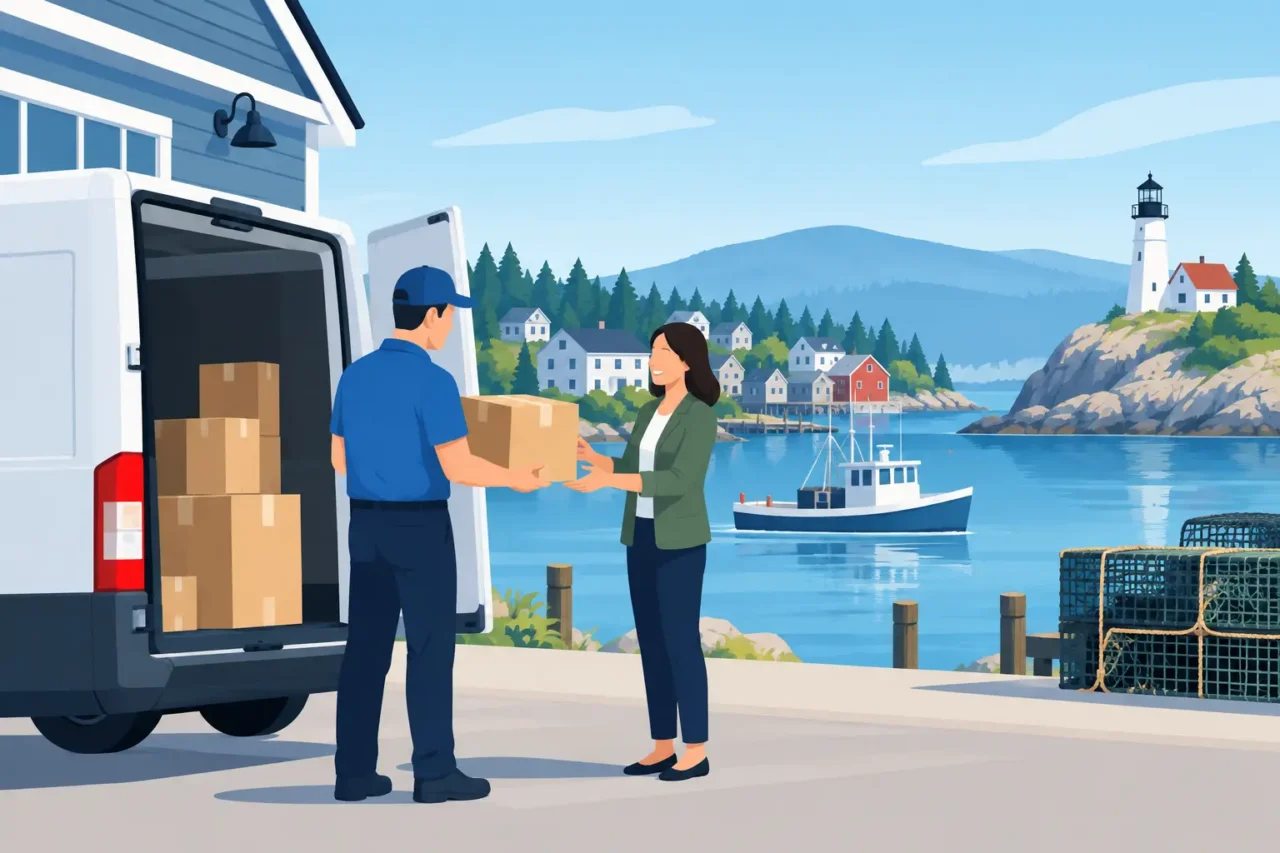
A part that misses the morning repair window can ground an aircraft. A lab specimen held too long can compromise a result. A pallet left on a dock overnight can stop a production schedule before the first shift arrives. For overnight delivery, Maine businesses need more than a package label and a promised arrival date. They need a transportation partner that can take custody of the shipment, protect it through the night, and confirm delivery when it matters.
Overnight service is not one-size-fits-all. The right plan depends on what is moving, where it must be delivered, who can receive it, and how much risk the shipment can tolerate. For time-sensitive freight, medical materials, critical parts, and high-value equipment, direct transport with a single accountable carrier is often the difference between a controlled delivery and an expensive delay.
What Overnight Delivery in Maine Really Requires
Maine presents its own operating conditions. Long rural stretches, coastal weather, limited after-hours receiving windows, and distance between major service centers can turn a routine shipment into a time-critical move. A carrier that knows the roads, terminals, hospitals, industrial sites, and regional airports can plan around those realities rather than discovering them after pickup.
The most dependable overnight deliveries start with a clear operational picture. Dispatch needs the pickup address, destination, ready time, required delivery time, shipment dimensions and weight, and any handling or access restrictions. If the delivery is going to a hospital, lab, airport cargo facility, plant, or secured site, the driver also needs the receiving contact and instructions for after-hours entry.
A quoted service should account for the actual work involved. Distance matters, but so do urgency, vehicle type, loading requirements, number of stops, shipment value, and whether a driver needs to wait at either end. A small envelope headed to Portland is a different assignment than a crated machine component going from Central Maine to a New England airport before dawn.
Direct Transport Reduces Overnight Risk
Many overnight networks move freight through terminals, sorting facilities, and multiple vehicles. That system works for routine parcel volume, especially when the delivery window is flexible. It can also create blind spots when the shipment is urgent, fragile, regulated, or difficult to replace.
Direct transport means the shipment is loaded onto the assigned vehicle and carried to its destination without transfers between drivers, terminals, or line-haul routes. Fewer handoffs mean fewer chances for a carton to be misrouted, delayed, or exposed to damage. It also gives the shipper a cleaner chain-of-custody from pickup through proof of delivery.
That approach is especially useful for medical specimens, pharmacy deliveries, critical documents, aircraft parts, industrial components, and expedited freight. It is not always the lowest-cost choice, and it is not necessary for every shipment. But when the cost of a missed deadline exceeds the cost of a dedicated vehicle, direct service is the practical decision.
Communication Is Part of the Delivery
A shipment is not under control simply because it has left the dock. Overnight moves require status communication that gives the customer useful information: confirmation that the driver has arrived, confirmation of pickup, an updated ETA if conditions change, and documented proof of delivery at the destination.
Clear communication is particularly important when a receiving team is waiting after hours. A lab technician may need to meet the driver. A maintenance crew may need to be ready to install a part immediately. A warehouse may need time to open a gate or assign a dock. The carrier should communicate early enough for those people to act.
Comet Couriers provides owner-led coordination, 24/7 dispatch, and live status updates because urgent freight does not wait for standard office hours. When a question comes up at midnight, customers need a person who understands the shipment, not an automated response that cannot make a decision.
Shipments That Often Need Overnight Service
Overnight delivery is often used for items where time, condition, or security has a direct business consequence. Medical specimen and pharmacy transport may require strict handling instructions and a documented chain-of-custody. A missed timing window can affect patient care, testing schedules, or medication availability.
Manufacturers and repair facilities commonly need overnight transport for replacement parts, tools, and equipment that keep a line, fleet, or job site running. In aviation, an AOG critical-parts response may be needed when an aircraft cannot return to service without a specific component. The shipment must get to the airport, FBO, cargo facility, or maintenance operation on schedule, with the driver able to meet applicable access requirements.
Freight can also require overnight movement when it is oversized, heavy, high-value, or unsuitable for a standard parcel carrier. A vehicle with the right capacity, proper cargo securement, and a qualified driver is not an optional detail. For loads that require it, Class A CDL capability helps ensure the transport plan matches the freight rather than forcing the freight into the wrong vehicle.
Credentials and Coverage Matter After Hours
Urgency should never be an excuse for loose handling. Before releasing a shipment, ask what protections are in place if the delivery involves valuable equipment, regulated materials, a secure facility, or airport access.
TSA-cleared and TWIC-carded drivers can be essential when access is restricted at ports, terminals, and certain transportation facilities. Cargo insurance and truck insurance provide another layer of protection, but coverage should be paired with sound operational practices: proper loading, securement, direct routing, documented custody, and a driver who understands the assignment.
For a Maine shipper, local accountability matters here. If weather closes in, a receiver changes instructions, or a pickup is not ready when expected, the carrier must be able to communicate the options plainly. Sometimes that means adjusting the route. Sometimes it means waiting on site. Sometimes it means identifying that the requested deadline is no longer realistic and giving the customer time to make another operational decision.
How to Book an Overnight Delivery Without Losing Time
The fastest way to arrange an overnight shipment is to provide complete details on the first call. Start with the pickup and delivery locations, including suite, dock, gate, or department information. State when the freight will be ready and the exact deadline at destination. Include dimensions, weight, packaging, declared value if relevant, and whether the shipment needs special handling, inside delivery, liftgate service, or a specific type of vehicle.
Then identify the people involved at both ends. A direct phone number for the pickup contact and receiving contact can prevent a driver from losing time at a locked building or unstaffed dock. If the delivery location has limited access hours, security requirements, or appointment procedures, say so before dispatch.
Finally, be specific about the consequence of delay. A shipment needed “first thing” may have a different operational meaning than one required by 6:00 a.m. for a surgical schedule, an aircraft departure, or a production restart. The more precisely the deadline is defined, the more accurately dispatch can match the vehicle, route, and driver availability to the job.
When Overnight Is Not the Right Service
Some deliveries do not need a dedicated overnight run. If the item can arrive during a broad window, a scheduled route or standard freight service may be more cost-effective. If the shipment is needed within hours, same-day rush service may be the better fit. If the load is large or requires specialized equipment, expedited freight may be more appropriate than a courier vehicle.
The value of a good transportation partner is not saying yes to every request without questions. It is recommending the service level that protects the deadline, the cargo, and the budget. The goal is not to overbuild the move. It is to eliminate the risks that would put the delivery at stake.
When tomorrow’s work depends on what leaves tonight, provide the details early, keep the receiving contact ready, and choose a carrier prepared to stay accountable until proof of delivery is in hand.