
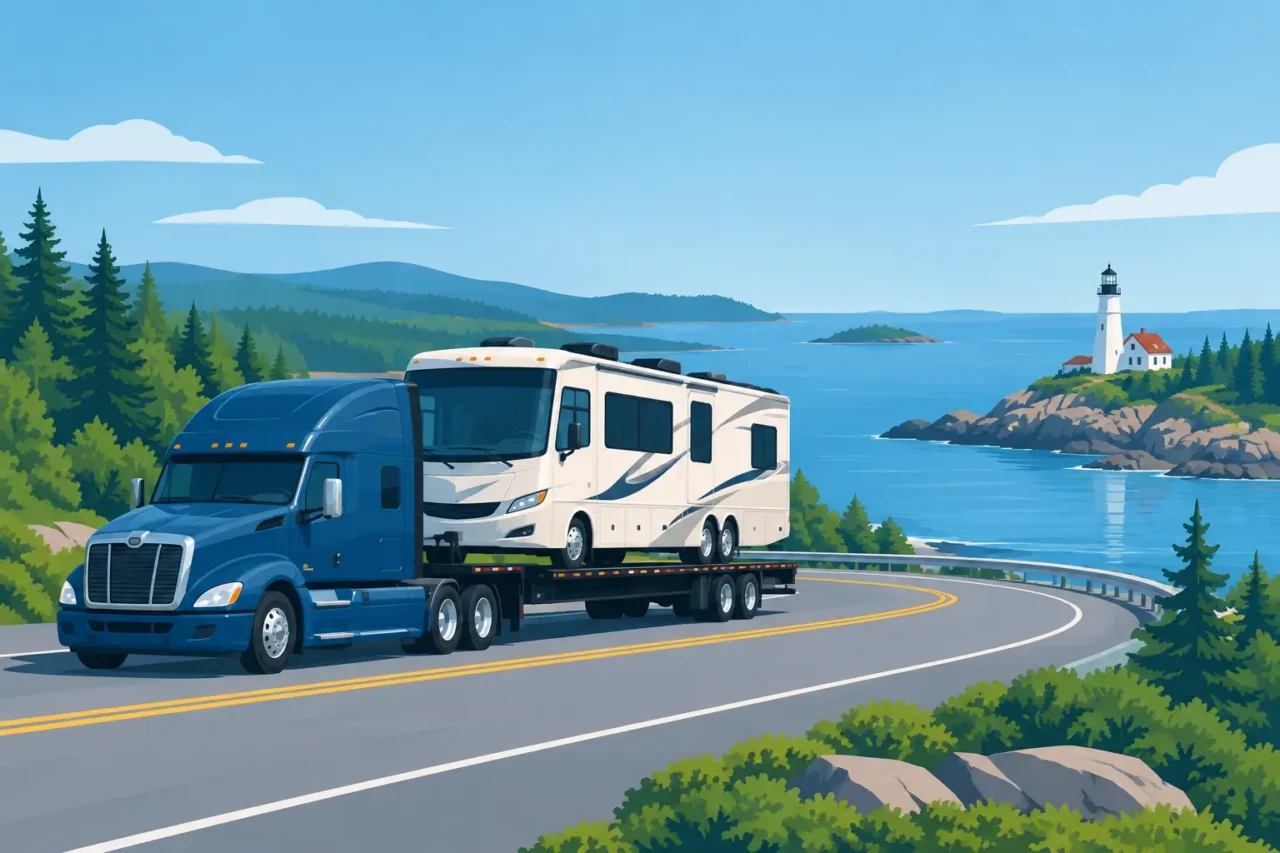
A Maine RV move can get complicated long before the rig reaches the road. A narrow camp lane, soft spring ground, a tight storage yard, ferry timing, or an out-of-state delivery window can turn a simple relocation into a job that requires real planning. The right RV transport service Maine owners choose should account for the trailer, the route, the pickup property, and the exact placement required at delivery.
For private owners, dealers, repair facilities, and seasonal campground customers, the goal is not simply to get an RV from Point A to Point B. It is to move it safely, keep communication clear, avoid unnecessary handling, and arrive with the equipment in the condition expected.
What Direct RV Transport Means
Direct transport means your RV is picked up by the vehicle assigned to the job and taken to its destination without being passed through terminals, transferred between drivers, or held on a multi-stop freight route. That matters when moving a travel trailer, fifth-wheel, motorhome, or specialty camper that needs careful hookup and controlled handling.
A transfer can add delay, exposure, and confusion about responsibility. Direct transport keeps the chain of custody simple: one coordinated move, one transport plan, and documented confirmation when the RV is delivered. It also gives the owner a clearer answer when asking where the unit is and when it will arrive.
For a short Maine move, direct service may mean relocating a trailer from winter storage to a coastal campground. For a longer move, it may mean hauling an RV from Central Maine to a buyer in New England or bringing a newly purchased unit home from another state. The route changes, but the need for disciplined execution does not.
Which RVs Need Professional Transport?
Not every RV move requires a transport provider. If you have the proper tow vehicle, towing experience, available time, and a straightforward route, moving your own unit may make sense. The decision changes when the trailer is large, the route is unfamiliar, the pickup is time-sensitive, or the delivery property leaves little room for error.
Professional RV transport is commonly used for travel trailers, fifth-wheels, pop-up campers, toy haulers, destination trailers, and motorhomes that cannot be driven by the owner. It is also useful when an RV is awaiting repair, has a mechanical issue, is being sold, or needs to be moved between storage, a dealership, a campground, and a private residence.
The type of RV determines the equipment and driver qualifications needed. A heavy fifth-wheel may require a properly rated truck and a Class A CDL driver, depending on the combined weight and configuration. A bumper-pull travel trailer requires the correct hitch setup, safety connections, lighting checks, and brake controller operation. A motorhome may need a different transport solution entirely if it is not roadworthy.
A responsible provider will ask specific questions before committing to the move. Vague information produces vague pricing and avoidable problems at pickup.
Information That Makes the Move Go Right
An accurate quote begins with the RV itself. Have the year, make, model, overall length, height, estimated weight, hitch type, and current condition ready. If the unit has slide-outs, low ground clearance, damaged tires, a dead battery, or a known mechanical issue, say so early. These details affect equipment, routing, loading time, and risk.
The pickup and delivery locations matter just as much. A driver needs to know whether there is room to turn around, whether overhead branches or wires create a clearance concern, and whether the access road is paved, gravel, muddy, steep, or narrow. A campground loop that works for a passenger vehicle may not work for a long trailer and tow vehicle.
If placement matters, describe the destination rather than assuming it will be obvious on arrival. Tell the dispatcher whether the RV needs to be backed into a site, left at a repair bay, staged in a dealer lot, or positioned in a specific storage row. Photos of tight entrances, gates, site pads, and difficult turns can help identify issues before the truck is en route.
Maine Conditions Change the Plan
Maine roads demand practical judgment. Seasonal weight restrictions, frost heaves, rural bridges, coastal traffic, road construction, and changing weather can all affect an RV move. A route that looks shortest on a map may not be the safest or most efficient route for a long trailer.
Spring moves require particular caution. Soft shoulders and thawing ground can make a storage field or campground entrance difficult to access. In summer, weekend traffic around popular lakes, coastlines, and campground areas can affect timing. Fall and winter introduce shorter daylight windows, wind, rain, snow, and icy surfaces.
Weather does not automatically prevent transport, but it may change the schedule. High winds can be a serious concern for tall or lightweight trailers. Heavy rain can compromise a dirt access road. When conditions make the planned move unsafe, a dependable carrier explains the situation, communicates the next available option, and does not force a bad decision just to keep a date on paper.
What to Check Before Pickup
The owner has a role in making the transport safe and efficient. Before the driver arrives, remove loose personal items, secure cabinets and doors, retract awnings and steps, close roof vents, and confirm that slide-outs are fully retracted. Disconnect shore power, water, sewer, and other campsite connections.
Check that keys, title or authorization documents when required, registration information, and any gate codes are available. If the RV has a spare tire, make sure it is accessible. Report tire concerns, bearing issues, brake problems, or damage honestly. A driver can plan around known conditions; undisclosed conditions cause delays and may create unsafe situations.
It is also wise to document the RV’s condition with clear photos before pickup. Capture each side, the roofline if practical, the hitch area, wheels, windows, and any existing damage. This is not about creating friction. It is a straightforward way to establish condition and protect everyone involved.
Why Communication Is Part of the Service
An RV owner may be coordinating a campground reservation, a buyer walkthrough, a repair appointment, or a narrow window with a property manager. A delivery estimate without updates is not enough when multiple people are waiting on the move.
A professional RV transport service should provide a clear dispatch plan, status communication while the unit is moving, and proof of delivery once the job is complete. If traffic, weather, access conditions, or a mechanical issue changes the expected arrival time, the customer should hear it directly rather than having to chase an answer.
Comet Couriers coordinates RV and trailer moves with the same direct-transport discipline used for time-sensitive freight: no unnecessary transfers, live communication, and accountable delivery confirmation. That approach is especially useful when the RV is valuable, the schedule is tight, or the pickup and placement require careful coordination.
Understanding RV Transport Pricing in Maine
There is no single flat rate for RV transportation because each move has different operating requirements. Distance is one factor, but it is not the only one. Pricing also reflects the RV’s dimensions and weight, urgency, vehicle and driver requirements, route complexity, pickup and delivery access, wait time, and any additional stops.
A short move can cost more than expected when access is difficult or placement takes significant time. A longer highway move may be more straightforward if both locations are easy to enter and the unit is ready at pickup. The most useful quote is one built from accurate details, not a low estimate that changes after the carrier arrives.
Ask what the quote includes and whether there are likely access, waiting, or scheduling considerations. Clear pricing starts with a clear scope of work.
Book the Move Before the Calendar Gets Tight
Campground openings, seasonal storage releases, dealership deliveries, and private-sale deadlines often create demand at the same time. Booking early gives the carrier more room to match the correct equipment, confirm the route, and coordinate property access. That said, urgent moves still happen, especially after a breakdown, a sale, or a sudden schedule change.
When requesting service, provide the RV details, both addresses, preferred pickup and delivery windows, contact information for each location, and any access notes. A good transport partner will turn that information into a workable plan, explain what needs to be ready, and keep you informed until the RV is placed where it belongs.
The best RV move is usually the one that feels uneventful at delivery: the right truck arrived, the route was planned, the owner received updates, and the RV was set down safely with no surprises waiting at the end of the road.